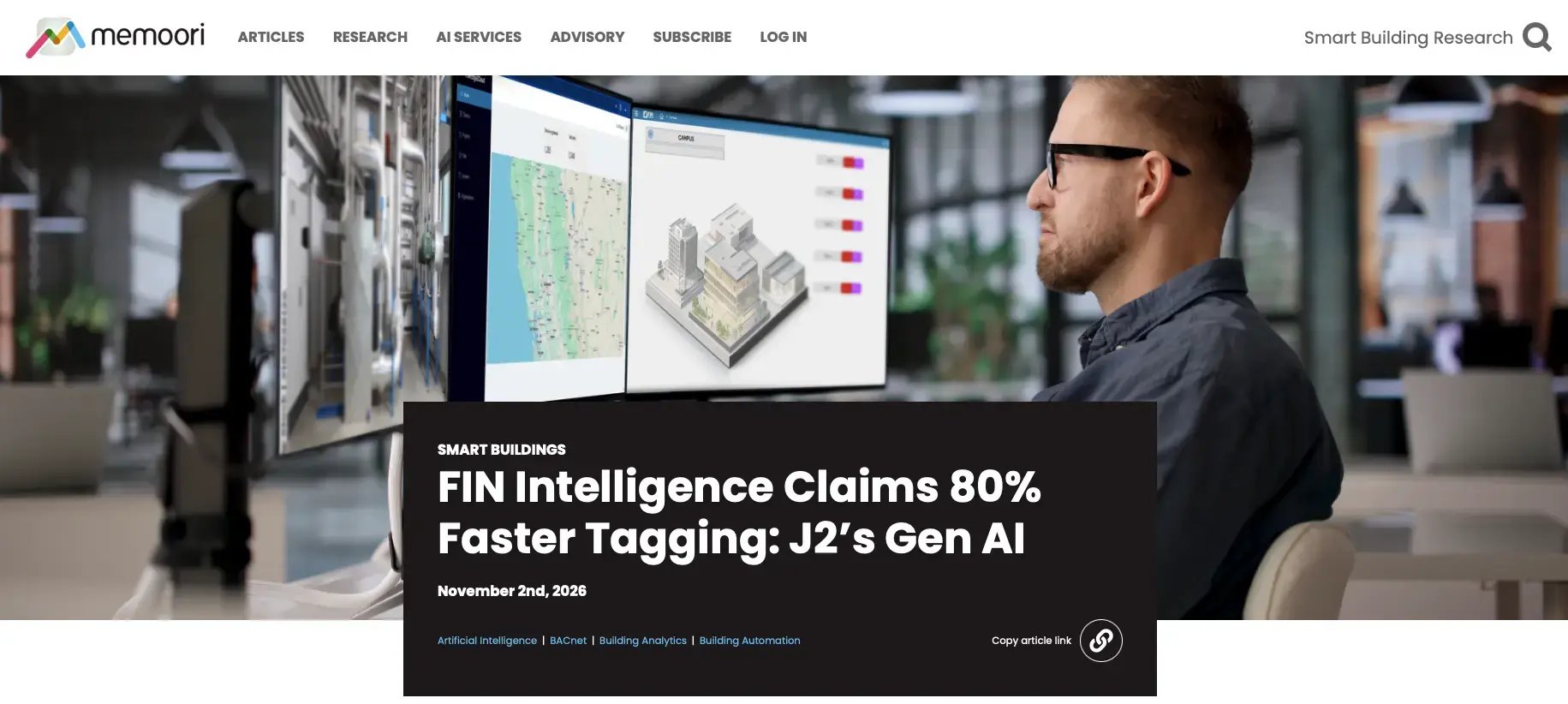
FIN Intelligence is the generative AI layer built into FIN Framework. It lets engineers, integrators and operators work with a building in plain language, from asking about an alarm to building a Modbus connector.
On November 2, Memoori published a research note on J2 Innovations: FIN Intelligence Claims 80% Faster Tagging: J2's Gen AI. I've spent a lot of years in this industry, and it's always useful to see how an independent analyst reads what you're building. Memoori got a lot right.
The feature set in the note reflects what we described during our beta. Since then, FIN Intelligence has been fully released with FIN Framework 5.3, and it does considerably more. Below, I'll summarize what Memoori said and then walk through where FIN Intelligence stands today.
Memoori describes FIN Framework as a data integration platform rather than a full-stack smart building suite. It unifies diverse building systems through open protocols and Haystack tagging. OEMs build their own branded solutions on top of it, which saves controls and HVAC manufacturers from writing a modern building management interface from scratch.
That's a fair description, except out of the box, FIN Framework is a full suite of supervisory and control applications. That suite forms the foundation for the technology our partners leverage and build on.
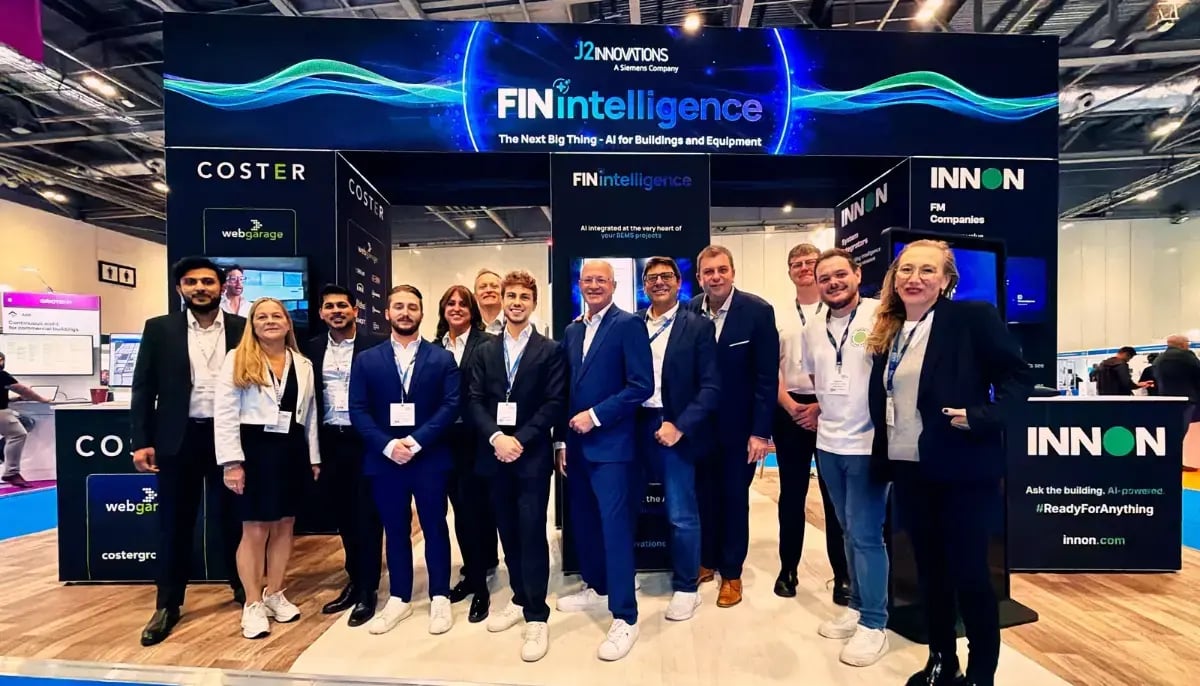
Memoori notes that we launched FIN Intelligence at the Smart Buildings Show in London in October 2026, aimed at systems integrators and end users. The note describes three features built on large language models:
Memoori also points out that FIN Intelligence runs on the edge and uses the cloud only when needed. Those three features are still part of the story, but FIN Intelligence has significantly continued to evolve (keep reading).
After a year of beta testing with customers worldwide, we officially launched FIN Intelligence globally in October 2026 with FIN Framework 5.3, called "The Intelligence Release." Customer feedback from the beta shaped what you see today.
The biggest change is scope. During beta, the assistant mostly answered questions. Now it understands where you are in FIN and can take action across commissioning, engineering, and operations.
We've also introduced FIN Intelligence Code for developers. It helps them build extensions, connectors and applications on top of FIN.
Memoori names Tridium's Niagara Framework as FIN's main competitor. Niagara has a larger installed base and a more mature partner ecosystem. Memoori says FIN has a more modern, semantically rich architecture that is arguably better positioned for data-centric buildings, but it needs to keep growing its footprint and partner network. I agree with both halves of that.
The note also compares FIN Intelligence to Delta's Building Canvas. Both target integrators and aim to reduce engineering effort. Memoori gives FIN the edge because it is an open, vendor-agnostic framework.
The most interesting part is Memoori's read on our channels. FIN Framework serves OEMs, while FIN Intelligence reaches systems integrators and building operators. Memoori sees four reasons this makes sense:
Memoori calls this dual-channel approach a smart way to cover the market without channel conflict. From my experience and the whole reason J2 Innovations was created, it comes down to something simpler. The people who commission and run buildings spend too much time on repetitive work, and FIN Intelligence is built to give that time back.
Memoori's note is a good snapshot of where FIN Intelligence started. The full release goes much further. It moves from answering questions to doing real work across commissioning, engineering and day-to-day operations.
We'll keep building on what our beta customers taught us, and we'll keep FIN Framework open so it works with the systems already in your buildings. If you'd like to see what FIN Intelligence can do on your projects, visit the FIN Intelligence page or reach out to our team


Topics from this blog: Smart Buildings FIN Framework Industry Building Automation System BAS News AI FIN Intelligence
Back to all posts