As an industry, building controls and the related toolsets to implement them have evolved over time, yet many similarities and inefficiencies have emerged alongside them. Read in our blog from Scott Muench, VP of Knowledge Excellence at J2 Innovations, on how modern-day control routines within a building automation system should be designed to leverage the engineering efficiencies of today's technology.
One of the first building controls approaches was to simply use air and mechanical means to make temperature control decisions, actuate valves, and modulate dampers. These pneumatic systems were comprised of individual receiver controllers for each equipment they controlled. One of my first jobs as a controls technician was to install over 100 VAV pneumatic controllers. The tools of the day were a roll of tubing, tubing cutters, and brass fittings. Each controller was painstakingly "plumbed" by connecting tubing from the main air supply to the controller to the valve and actuator. This process continued literally 100 times until all were complete.
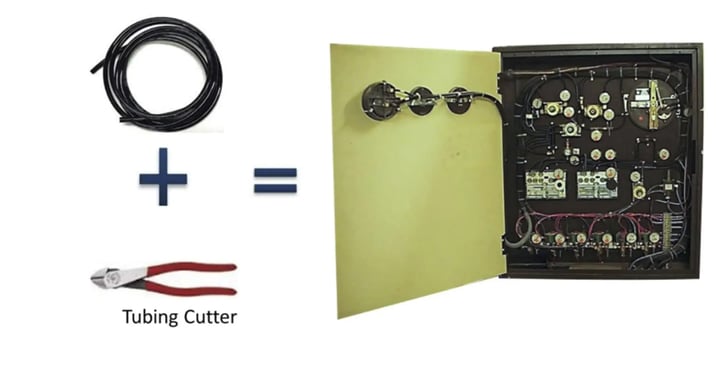
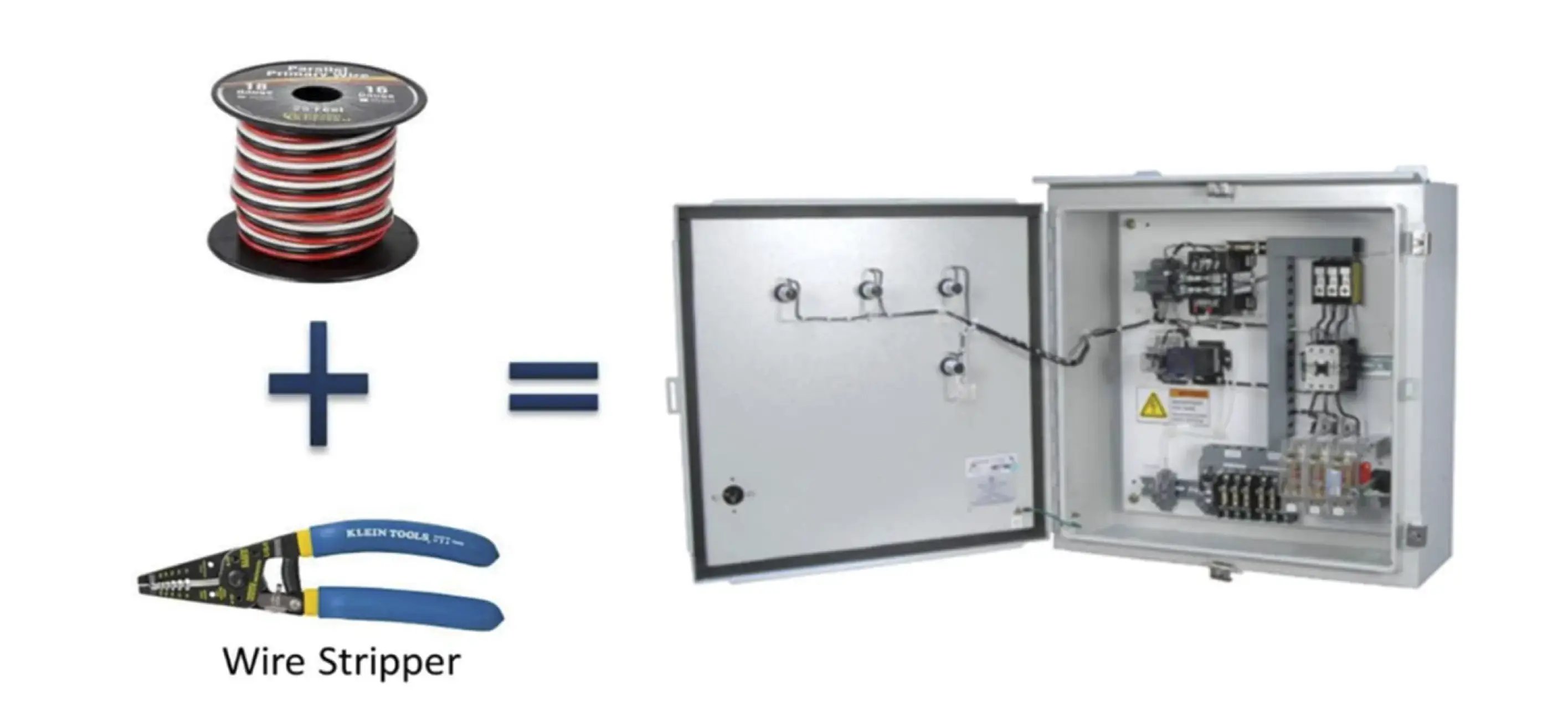
Fast forward a decade, and new electronic controls are introduced to overcome some of the challenges of calibrating pneumatic controllers and maintaining their air supply systems. These new controllers use electronic devices and wires that send a signal to electric actuators for both valves and dampers. The tools of the day were now substituting wire for tubing, wire cutters for tubing cutters, but the same approach still applied, where each controller got individually "wired" to its specific equipment.
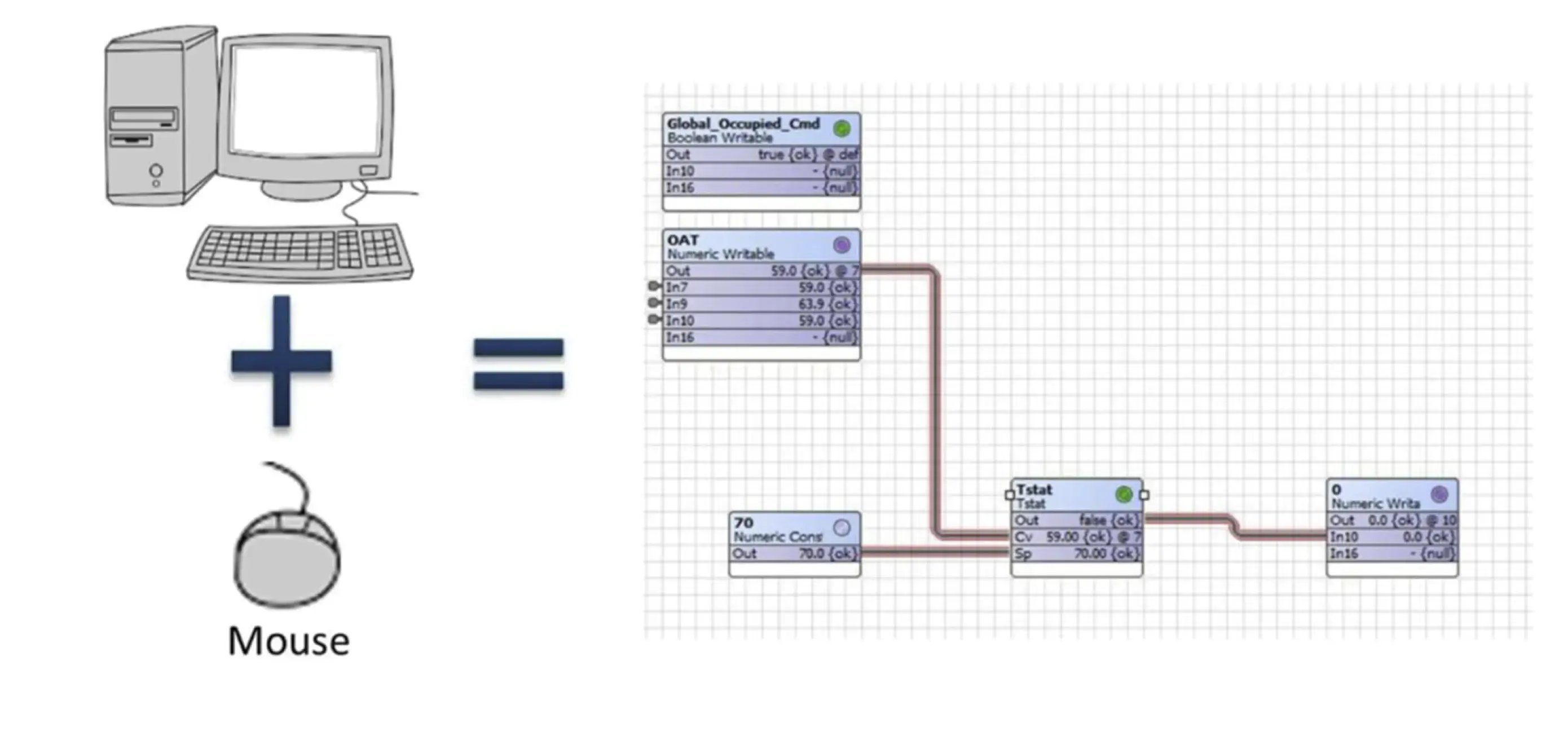
One of the most exciting turning points in my career was when I was first introduced to direct digital controls (DDC), when I saw for the first time a laptop keystroke turning on a fan and opening a damper. Now, control sequences were entirely digital and ran inside microprocessor-based controllers, sensors were wired into the inputs, and relays and actuators were wired to the outputs. The tools had evolved from the physical world to the virtual world, where the mouse replaces the hand tools, and the computer screen replaces the plumbing and the wiring. Ironically, the approach to engineering the controls remained the same. If I had 100 VAVs, I would have to "create" and "link up" 100 control routines.
The real innovation in controls came when computers and software were used as a virtual extension of the physical world. It became a productivity tool to reduce repetitive and error-prone tasks. By introducing tagging and data modeling, some modern building automation software eliminates the recursive, inefficient copy/paste of control sequences. Imagine a control engine that utilizes a one-to-many approach to running control routines, meaning there is only one set of blocks that dynamically link themselves to as many equipment as there are in the project (10-10,000 VAVs).
The magic happens when the digital version of the real world is modeled using standard metadata (and the use of tags). By using a standard data model, the building automation software toolset is used to create a typical control routine, which describes the input and output points, then enables the dynamic linking of the IO to the control blocks.
%20(1).webp?width=717&height=229&name=tools%20preso%20(dragged)%20(1).webp)
It has been an interesting journey to take part in the evolution of building controls and the related tools of the era. From my early beginnings cutting and connecting pneumatic tubes to brass fittings, to wiring sensors and actuators to DDC controllers, the old approach of "engineering" those projects one by one, equipment by equipment has changed. Thanks to software like FIN, which leverages structured data and advanced tools such as FIN Intelligence, you can now engineer a single control sequence and have it applied across hundreds of instances—without spending hours repeatedly copying and linking each one.


Topics from this blog: Systems Integrator Smart Buildings Technology Industry Building Automation System BAS FIN
Back to all posts